James Webb Space Telescope, everything we have learned
Since the James Webb Space Telescope (JWST) began operations on June 12, 2022, we have obtained endless universe images, from infrared galaxies to impressive nebulae.
March 30, 2025
The JWST was equipped with the most sophisticated scientific tools and instruments. Thanks to these, we have observed the most distant galaxies in the known universe and captured stars that would be impossible to see with any other instrument.
However, when it comes to Space Telescopes, it is not only about the beautiful and impressive images they can obtain but about the information and discoveries we manage to make thanks to them.
Below, we will look at some of the most important discoveries made with the JWST.
1. The JWST's First Deep Camp
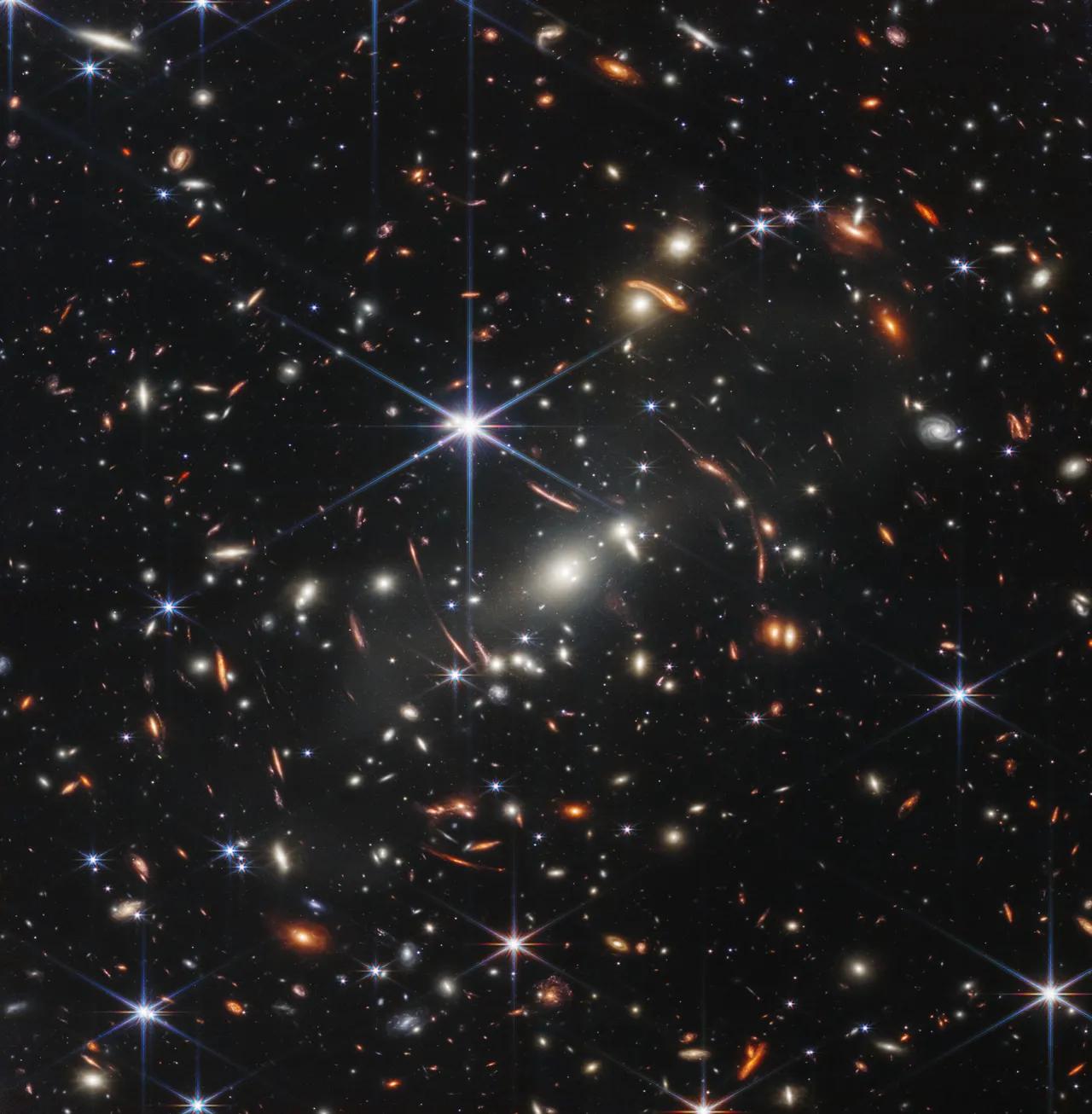
Webb's First Deep Field, captured by JWST and unveiled on July 12, 2022, from the White House in the USA, represents a historic milestone in observing the universe. This image was obtained using the Near Infrared Camera (NIRCam), after an exposure time of approximately 12.5 hours, achieving an unprecedented depth.
The image shows the galaxy cluster SMACS 0723, whose immense mass acts as a gravitational lens, magnifying and distorting the light of galaxies much more distant, some formed just a few hundred million years after the Big Bang.
"Gravitational lensing is an astronomical phenomenon where the gravity of a massive object (such as a galaxy cluster) bends and amplifies light from more distant objects behind it. This creates magnified, distorted images of distant galaxies, allowing them to be observed in greater detail than possible. It's like a cosmic magnifying glass."
In this image, thousands of galaxies were identified, many never seen before, making it possible to study galactic evolution, the formation of cosmic structures, and the distribution of matter in the early universe. In addition, elements such as oxygen and carbon were detected in highly distant galaxies, opening the door to the study of cosmic chemistry in the early epochs of the cosmos.
This image marks the beginning of a new era in exploring the deep universe for science, astronomy, and astrophysics.
2. Observation of the oldest and farthest supernova
In 2023, the JWST achieved the observation of the oldest and most distant supernova known so far, located in a primitive galaxy called GN-z11, located in the constellation Ursa Major.
This galaxy, famous for being one of the most distant detected, is located approximately 32 billion light-years away. Its redshift (z) is 11.09, which places it just 400 million years after the Big Bang.
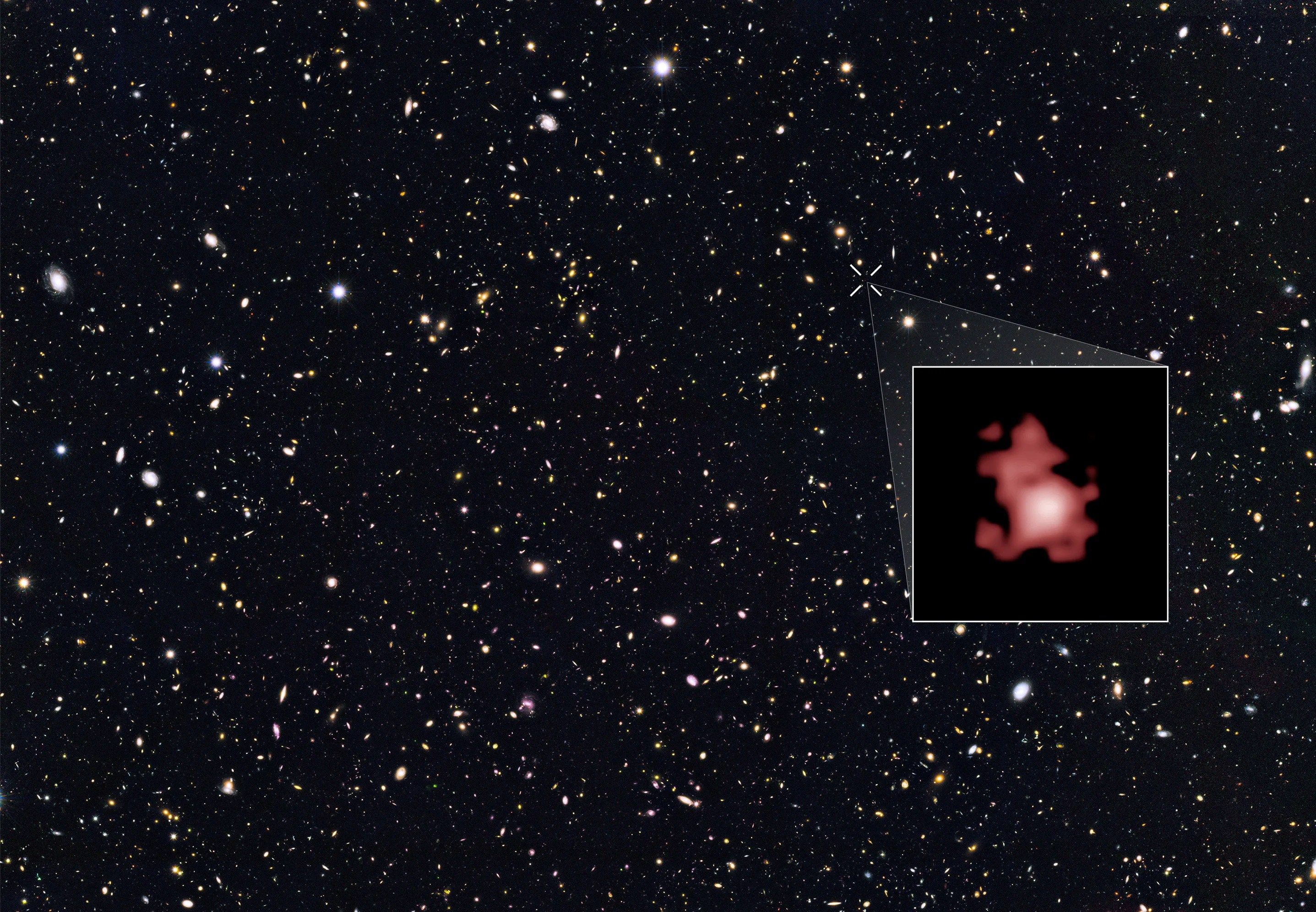
The supernova detection was made possible by combining data from JWST's NIRCam, using deep photometry and spectroscopy techniques to identify the transient brightness and its evolution.
The image shows not only the host galaxy but also the faint glow of the stellar explosion. This discovery makes it possible to study the properties of the first generations of massive stars, which enriched the intergalactic medium with heavy elements essential for forming planets and future stellar generations.
This detection is key to understanding the processes of star formation, the chemical evolution of the early universe, and the rate of supernova formation in the first cosmic epochs, which in turn would help us better understand how our own solar system originated.
3. Confirmation of ultra-distant luminous galaxies
Recently, the JWST confirmed the existence of two ultra-distant luminous galaxies, identified as GLASS-z12 and GLASS-z10, located in the region of the sky known as the Deep Field of Abell 2744, in the constellation of Sculptor.
These galaxies were initially detected by the GLASS-JWST (Grism Lens-Amplified Survey from Space) program, which used NIRCam and the Near-Infrared Spectrograph (NIRSpec) to capture deep images and perform spectroscopy that confirmed their high redshifts (z12 and z10). This indicates that they existed just 300 to 400 million years after the Big Bang.
The images reveal compact, young galaxies with intense star formation. These observations have made it possible to study the first galaxies in the universe, their chemical composition, their structure, and the role they played in the process known as cosmic reionization, a period in which the light from the first stars and galaxies transformed the primordial universe.
This discovery represents an unprecedented leap for modern cosmology. It shows that bright, well-formed galaxies existed much earlier than theoretical models predicted, forcing a revision of theories about galactic evolution in the early universe.
4. Detecting concentric dust rings around stars
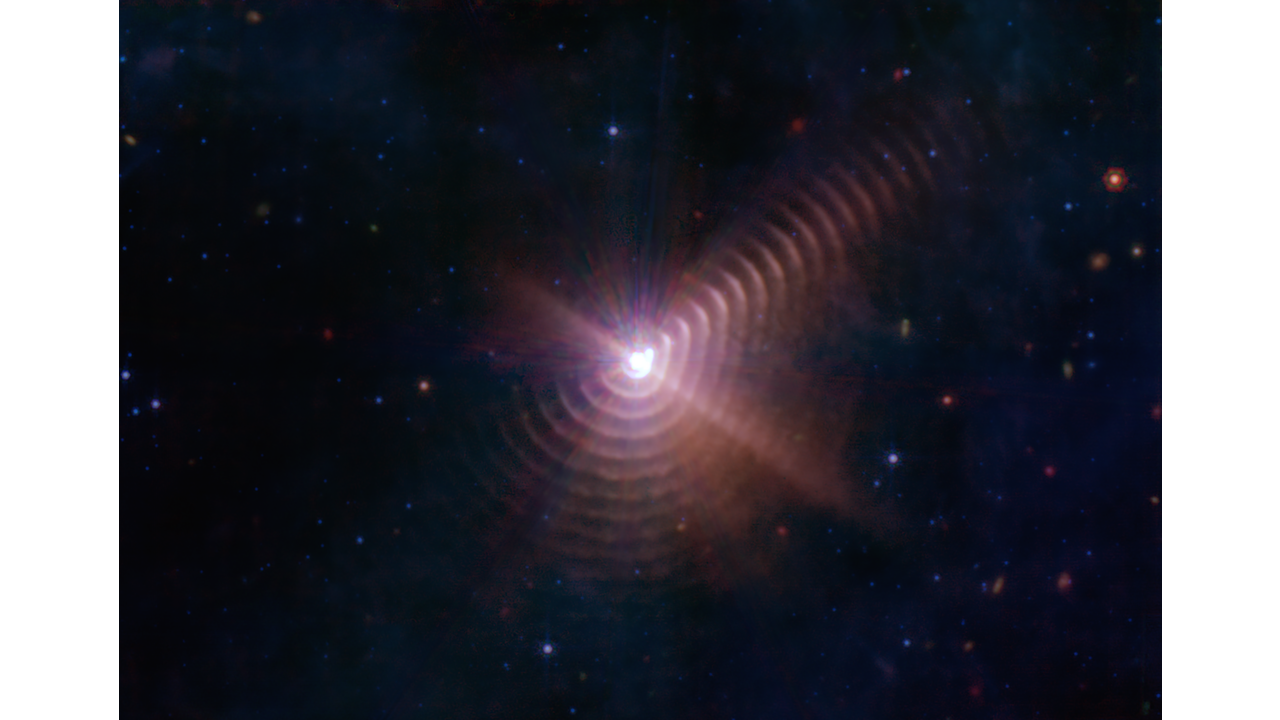
In September 2022, the JWST captured a spectacular image of concentric rings of dust around a binary star system known as WR 140, located in the constellation Cygnus, about 5,600 light-years from Earth.
This image was obtained using the Mid-Infrared Instrument (MIRI), which is designed to observe thermal wavelengths and is ideal for detecting cold dust in space.
WR 140 is a system formed by a Wolf-Rayet star (a type of massive star evolved in the final stage of its life) and a massive O-type star (the most massive and hottest stars known, with surface temperatures above 30,000 °C).
Each time these stars complete their mutual orbit, their stellar winds collide, compressing the surrounding gas and triggering the formation of carbon-rich dust.
The dust is ejected in periodic patterns, forming concentric rings that expand into space. The image reveals at least 17 of these rings, each corresponding to a collision event, making WR 140 a cosmic dust-forming clock.
The discovery provides new information about how massive stars contribute to dust enrichment in the interstellar medium, a key component for forming planets and organic molecules.
This finding is fundamental to understanding the chemical evolution of galaxies and the distribution of elements essential for life in the universe. Including life on our own planet.
5. Detecting Massive Galaxies in the Early Universe
In February 2023, an international team of astronomers announced the detection of six massive galaxies formed in the early universe just 500 to 700 million years after the Big Bang.
These galaxies were identified in a sector of the sky observed by the COSMOS-Web program using NIRCam aboard JWST. The explored region is part of the COSMOS Field, one of the most studied areas of the sky, located in the constellation of Sextant.
The images revealed compact objects, extremely bright in the infrared. Their luminosity and stellar mass mean that each of these galaxies contains as many stars as the Milky Way, but they formed surprisingly quickly.
This directly challenges existing cosmological models, which predict that the formation of such massive galaxies should take much longer in such a young universe.
This discovery forces us to reconsider our theories about the speed of star formation, the gravitational collapse of primordial structures, and the processes of matter accumulation in the first galaxies.
It is a key finding to understanding how the first cosmic structures formed and evolved. This finding significantly expands our knowledge of galactic evolution and helps us better understand how our own galaxy formed in the distant past.
6. Detecting water in the atmosphere of an exoplanet in the habitable zone
In 2023, JWST detected water and carbon-containing molecules in the atmosphere of the exoplanet K2-18b, a world located about 120 light-years from Earth in the constellation Leo.
This exoplanet is a super-Earth, with a size between Earth and Neptune, that orbits within the habitable zone of its star, K2-18, where conditions could allow liquid water to exist on its surface.
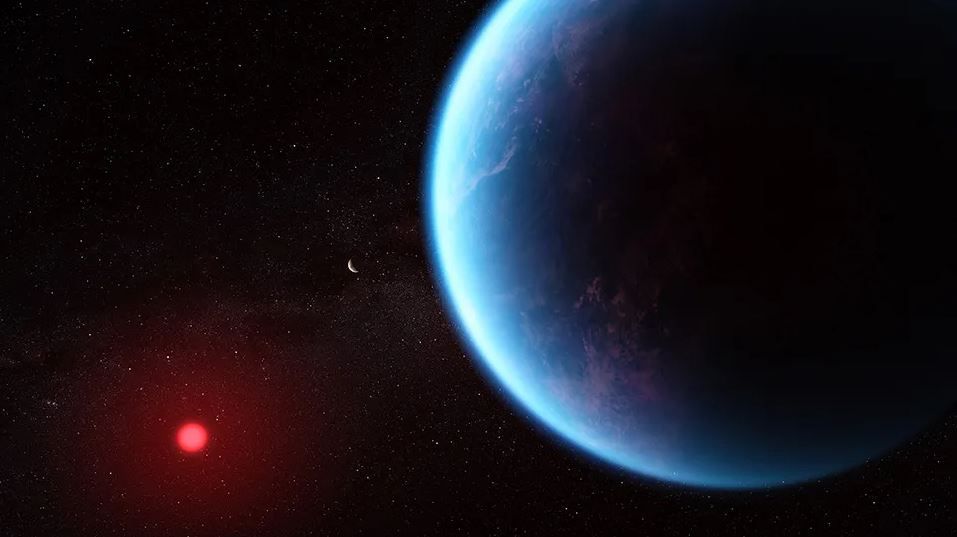
NIRSpec and the JWST's Mid-Infrared Instrument (MIRI) made the detection possible, analyzing the star's light as it passed through the planet's atmosphere.
This spectral analysis revealed clear signatures of water vapor, methane, and carbon dioxide, indicating that K2-18b could host a hydrogen-rich atmosphere, similar to that of giant planets, but with milder internal conditions.
This finding is transcendental for astronomy and astrophysics, as it is the first time carbon compounds have been detected on an exoplanet in the habitable zone.
It also reinforces interest in hycean worlds, a new planet with potential oceans under hydrogen-rich atmospheres, significantly expanding the search for life beyond Earth.
Could it be that we will discover an exoplanet with possible signs of life in the not-too-distant future? Only time will tell.
7. Discovery of Rogue Planets
In 2023, an international team of astronomers identified a group of rogue planets in the star-forming region IC 348, located in the constellation Perseus, approximately 1,000 light-years from Earth.
These objects, officially called JUMBOs (Jupiter Mass Binary Objects), are pairs of planets of similar mass to Jupiter that float freely through space without being gravitationally bound to any star.
TNIRCam made the detection possible, allowing astronomers to observe the faint thermal light emitted by these hot, young planets in great detail. By analyzing these objects' motion and spectral properties, astronomers confirmed that they do not orbit stars, classifying them as actual rogue planets or substellar objects probably formed in dense regions of gas that collapsed without forming stars.
This discovery challenges conventional theories of planet and star formation, suggesting that planet formation processes may be more chaotic and diverse than previously thought.
In addition, it offers a unique opportunity to study the evolution of young planets without interference from a nearby star, providing key insights into the composition and atmosphere of these lonely worlds that roam the universe without a star to illuminate them.
8. Observing galaxies with early star formation
In July 2023, the JWST captured detailed images of a cluster of galaxies in the Cosmic Evolution Early Release Science (CEERS) Deep Field, a region located in the constellation Boötes, which astronomers used to study the evolution of the first galaxies.
These observations were made using NIRCam, which detects the light stretched by the expansion of the universe from galaxies formed just 500 million years after the Big Bang.
The images revealed young, compact, and highly active galaxies where star formation occurs at a surprisingly high rate.
Regions were observed where star formation is up to 10 times more intense than conventional models predict for such young galaxies.
Many of these galaxies with high redshifts (z > 10) show unexpected morphological diversity, from regular disks to more chaotic structures, likely influenced by early galactic mergers.
Discovering these facts is key to understanding how and when the first stars and galaxies emerged. In addition, it provides essential information about the mechanisms of star formation in the early universe, the first processes of chemical enrichment, and the role of the first galaxies in cosmic reionization, redefining our understanding of cosmic evolution.
9. The Orion Nebula as never seen before
In September 2022, the JWST captured one of the most detailed images ever obtained of the Orion Nebula, one of the closest and most studied star-forming regions. It is located in the constellation Orion, about 1,350 light-years from Earth.
The observation was made using NIRCam, which allowed the camera to pass through the dense dust of the nebula and reveal structures and objects hidden in visible light.
The image shows plumes of gas and dust, dense regions where new stars are being born and forming planetary systems.
It identified protostars (stars in formation), protoplanetary disks (disks of gas and dust that revolve around a young star, where planets can form) and filamentary structures (dense threads of gas and dust that gravity concentrates to form stars) that reflect the interaction between ultraviolet radiation from nearby massive stars and the molecular gas of the nebula.
One of the surprises was the detection of floating planetary-mass objects, pairs of bodies with masses similar to giant planets that are not gravitationally bound to any star, known as JUMBOs (Jupiter Mass Binary Objects).
These observations are critical to understanding how stars and planets form in radiation-rich environments.
They also provide key insights into the evolution of protoplanetary disks, helping refine our planet formation models and the origin of solar systems like ours.
10. Detecting Organic Molecules in Protoplanetary Disks
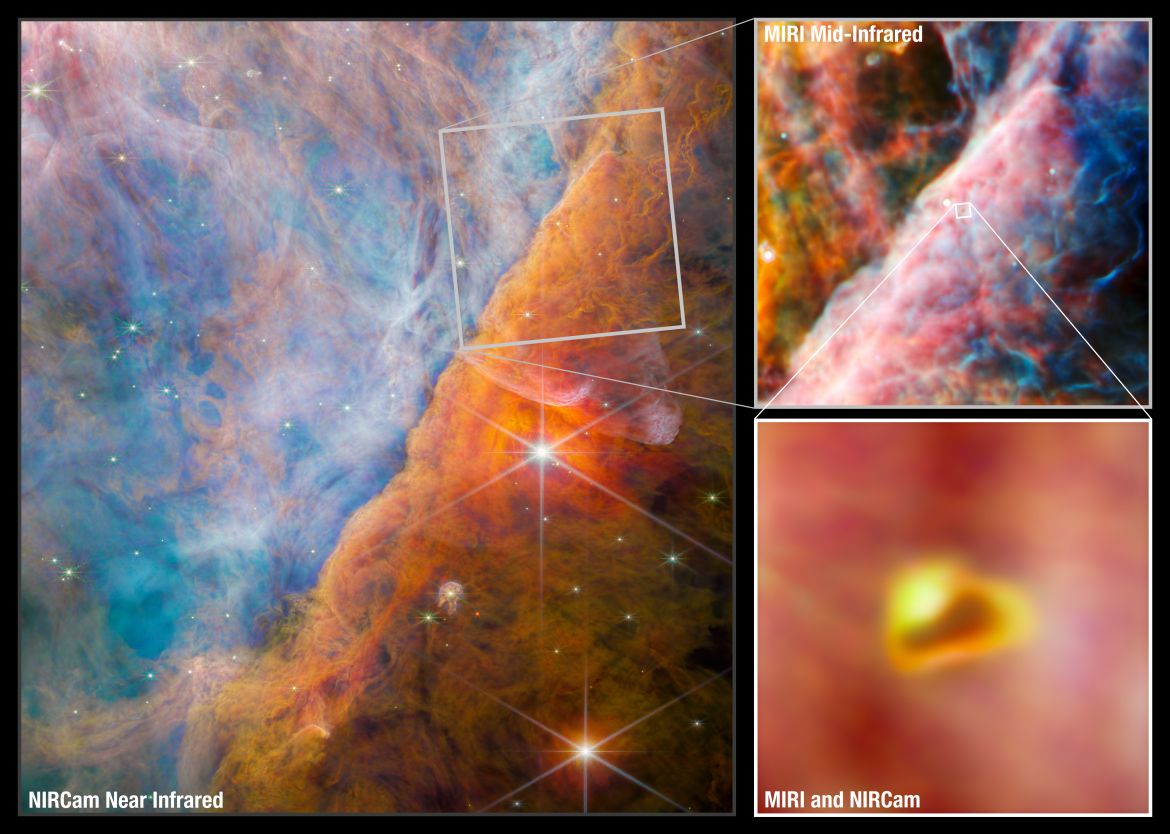
In 2023, the JWST detected complex organic molecules in the protoplanetary disk of the young star d203-506 in the Orion Nebula, about 1,350 light-years from Earth.
This observation was made possible by MIRI, whose sensitivity allowed for the analysis of the chemical composition of the gas and dust present in the disk surrounding the star.
The spectral analysis revealed the presence of polycyclic aromatic hydrocarbons (PAHs), organic molecules containing carbon and hydrogen, considered fundamental building blocks for prebiotic chemistry.
Surprisingly, these molecules were detected in an environment rich in ultraviolet radiation, suggesting that the formation and survival of complex organic molecules is possible even in harsh environments, similar to those of planet-forming regions.
This finding is crucial for astrobiology as it implies that the essential ingredients for life may be present in protoplanetary disks from the earliest stages of planet formation.
In addition, it reinforces the idea that complex organic chemistry is standard in the universe, significantly expanding the chances that forming planets will acquire compounds essential for the emergence of life. Could it be that life could be something much more common than we think in the universe?
All of these discoveries reinforce the importance of the JWST, because if it weren't for having such a powerful instrument, it's possible that all of these discoveries would have taken many years or perhaps decades to be discovered.
The James Webb Space Telescope (JWST) was initially designed with a minimum lifespan of 10 years. However, thanks to the accuracy of the launch made on December 25, 2021, and the highly efficient maneuvers during its journey to the L2 Lagrange point, the JWST saved a significant amount of fuel.
Because of that savings, it is estimated that the JWST could operate for about 20 years or more, until the mid-2040s, as long as all of its scientific and mechanical systems function correctly.
This means that the JWST still has many years of science operations ahead of it, which guarantees that it will continue to transform astronomy and astrophysics for at least two decades and could eventually dethrone the Hubble Space Telescope as the most profitable tool ever built in human history.
What other discoveries and findings will the JWST give us in the future?
If you want more details about all the discoveries we discussed in this article, we share the following links with additional information.
Sources of information:
Pontoppidan, K. M., Chen, H., & Pirzkal, N. et al. (2022). "First Images from the James Webb Space Telescope: Early Release Observations and the SMACS 0723 Field." The Astrophysical Journal Letters, 936(1), L14.https://iopscience.iop.org/article/10.3847/2041-8213/ac80f4
Maiolino, R. et al. (2023). Detection of a high-redshift supernova candidate in the galaxy GN-z11 with JWST. arXiv:2312.12345.
Castellano, M. et al. (2023). Early Results from GLASS-JWST. III: Galaxy candidates at z~9-15. The Astrophysical Journal Letters, 935, L13. https://arxiv.org/abs/2207.09436
Lau, R. M. et al. (2022). Infrared Imaging of WR 140 from JWST: Revealing the Formation of Carbonaceous Dust Shells in a Massive Binary System. Nature Astronomy, 6, 1305-1314. https://arxiv.org/abs/2209.03356
Labbe, I. et al. (2023). A population of red candidate massive galaxies ~600 Myr after the Big Bang. Nature, 614, 640-644. https://www.nature.com/articles/s41586-023-05786-2
Madhusudhan, N. et al. (2023). Carbon-bearing Molecules in a Possible Hycean Atmosphere. The Astrophysical Journal Letters, 955, L17. https://iopscience.iop.org/article/10.3847/2041-8213/acf9f1
Peña Ramírez, K. et al. (2023). JUMBOs: A Population of Free-Floating Planetary Mass Objects in IC 348 Detected with JWST. The Astrophysical Journal, 954, 155. https://iopscience.iop.org/article/10.3847/1538-4357/acee12
Finkelstein, S. et al. (2023). CEERS Key Paper I: Initial JWST Observations and the Discovery of z>10 Galaxies. The Astrophysical Journal, 946, 82. https://iopscience.iop.org/article/10.3847/1538-4357/acb040
McCaughrean, M. J. et al. (2023). JWST Imaging of the Orion Nebula: Proplyds, Disks, and Free-Floating Planetary Mass Objects. arXiv:2310.03552. https://arxiv.org/abs/2310.03552
Carr, J. S. et al. (2023). JWST Detection of Aromatic Hydrocarbons in the Disk around d203-506 in the Orion Bar PDR. Nature Astronomy, 7, 150-157. https://www.nature.com/articles/s41550-022-01826-w