Fascinating theories about extraterrestrial life
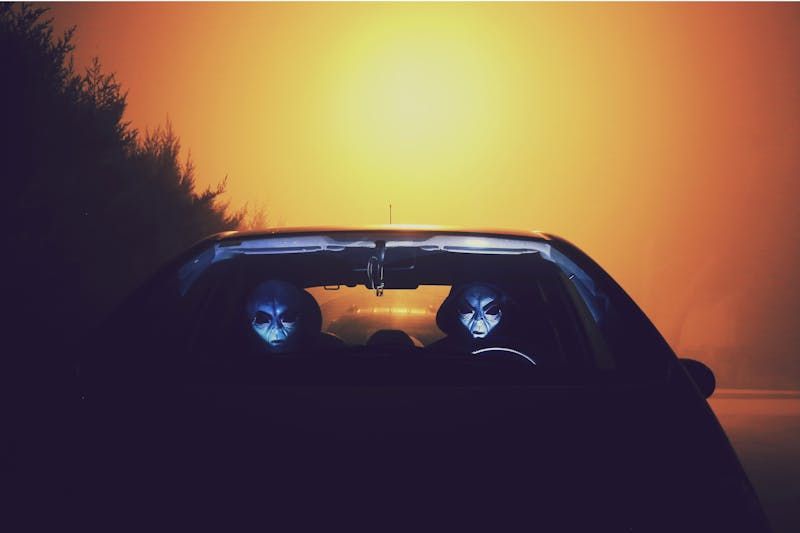
Although we have not yet found extraterrestrial life, if we were to find it, what would it be like? Would it be life as we know it, or do aliens look nothing like what we imagine?
May 7, 2025
Whether life exists on other planets or in any other part of the universe beyond Earth is a question that currently has no definitive answer. However, some scientists, such as astronomers, continue to work diligently to find signs of life in the universe.
Although we have not yet found extraterrestrial life, if we were to find it, what would it be like? Would it be life as we know it, or do aliens look nothing like what we imagine?
What if what we found out there were not green humanoids, or creatures with giant eyes, but beings made of plasma, life in a toxic atmosphere, or consciousnesses that inhabit electromagnetic fields?
In this article, we'll explore scientific theories that challenge everything we think we know about life. From organisms that don't need carbon to forms of existence beyond matter... How far can the imagination backed by science go?
Life as we know it
Currently, the search for extraterrestrial life is primarily focused on finding life forms similar to those we know on Earth: carbon-based organisms that depend on liquid water.
This preference is not a whim, but a logical decision based on scientific evidence.
Carbon is an exceptionally versatile element that forms long chains and complex structures, essential for biological molecules such as proteins, nucleic acids, and lipids. In addition, water is a universal solvent capable of dissolving a wide variety of compounds, facilitating the chemical reactions necessary for life.
Since the only form of life we know of is terrestrial, using it as a model allows us to apply transparent and verifiable criteria when searching for life on other worlds. After all, how could we look for life forms that we don't know?
For this reason, missions such as those to Mars, Europa (Jupiter's moon), or Enceladus (Saturn's moon) focus on detecting water, organic compounds, and conditions similar to those on Earth.
The criterion is simple: if life could have arisen in a place like Earth, and if we find another place with conditions similar to those on Earth, then we will likely also find life forms like those on Earth.
One of the proponents of the search for carbon-based extraterrestrial life was Stephen Hawking. He argued that, because carbon is so versatile, carbon-based life forms could arise in the universe that are as diverse as they are fascinating, so it was not necessary to resort to exotic elements to imagine alien beings.
Over the years, several scientists have envisioned these life forms, which, although they utilize the same fundamental elements as terrestrial life, could develop in extreme environments or with radically different structures.
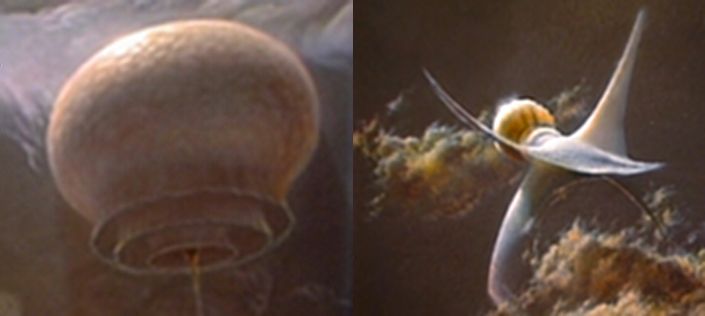
One such proposal came from scientists Carl Sagan and Edwin Salpeter, who in 1976 imagined the possibility of floating life forms in Jupiter's dense atmosphere. They called them "floaters," "sinkers," and "hunters," giant beings with jellyfish-like structures or balloons that would move through the clouds, absorbing chemical and solar energy.
Another example was proposed by molecular biologist Jack Cohen, together with mathematician Ian Stewart, who suggested in their books on exobiology that carbon-based forms of life could have entirely different architectures, such as crystalline creatures, organisms with unconventional symmetries, or even entangled structures that would look nothing like living beings on Earth.
Astrobiologist Christopher McKay has also raised the possibility of carbon-based life, but adapted to alternative solvents such as liquid methane on Titan, which would involve slow biochemistries, different cell membranes, and cryogenic metabolism.
This is where the "Extremophiles" come in.
Extreme life hypothesis (extremophiles)
In the most extreme corners of the planet, where it would seem impossible that anything could survive, life not only resists... it also prospers. These extraordinary organisms, known as extremophiles, have revolutionized the way scientists think about the possibility of extraterrestrial life.
Because if something can survive in the depths of a volcano or frozen in the vacuum of space, what couldn't survive out there, in another world?
On Earth, extremophiles inhabit areas where conditions are so lethal for most organisms that, until a few decades ago, it was thought that life was simply not possible.
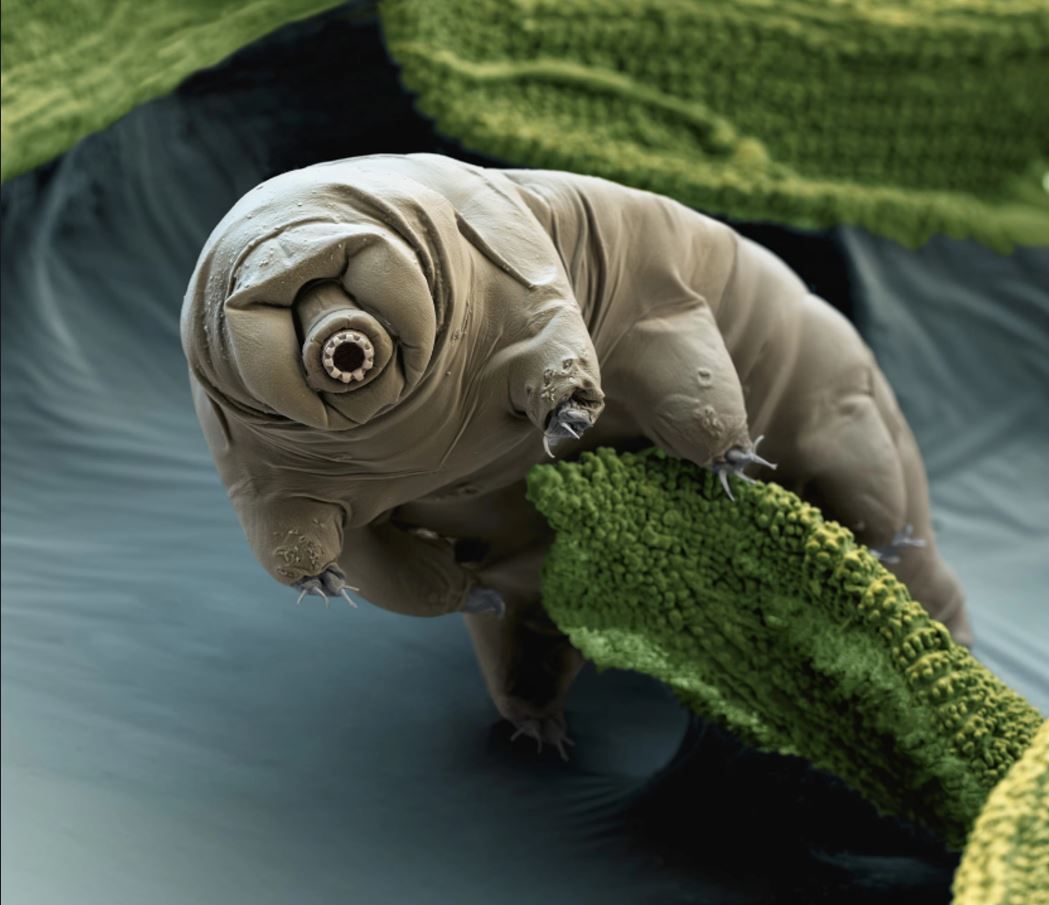
One of the most fascinating examples is that of tardigrades, also known as water bears. These tiny animals, measuring less than 1 millimeter, have been subjected to extreme tests: radiation, a space vacuum, temperatures of almost 240 Celsius, and even direct exposure to cosmic rays. And, surprisingly, they survive.
But tardigrades are not alone. In the acidic springs of Yellowstone, where the water exceeds 80°C and is saturated with toxic compounds, specialized bacteria and archaea thrive.
At the bottom of the oceans, near hydrothermal vents, entire communities of very diverse organisms live without the need for sunlight, feeding exclusively on chemical compounds such as hydrogen sulfide.
So if these life forms are possible on our planet, what other life forms could emerge in even more extreme environments on other planets?
Under this premise, creatures like the ones imagined by Carl Sagan stop looking so far-fetched and allow us to imagine that right now, as you read this, there could be a whole "herd" of giant jellyfish the size of cities floating in the dense Jupiter clouds.
If anything has become clear in recent decades, it is that life does not need a temperate climate or a friendly atmosphere to arise. It only needs time, raw materials, and a source of energy. And in a universe with billions of worlds, those conditions could be repeated many times, in many places... with results as exotic as they are unimaginable.
Life based on other elements (non-carbon)
Although carbon-based life is the first step in the search for extraterrestrial life, since the technology we have makes it easier to search for life as we know it, scientists do not rule out the possibility that there could be forms of life in the universe that do not require carbon for their development.
When carbon is taken out of the equation, the first element that appears to replace it is silicon.
Like carbon, silicon can also form four stable chemical bonds, making it a logical candidate for an alternative biochemistry. It is the second most abundant element in the Earth's crust after oxygen.
The problem is that silicon compounds are much more unstable at room temperature and do not form the flexible structures that allow for the complexity of biological molecules. But on much colder planets, or with atmospheres charged with reactive gases, these limitations could disappear.
Picture it: beings composed of mobile crystals, nourished by minerals rather than organic nutrients.
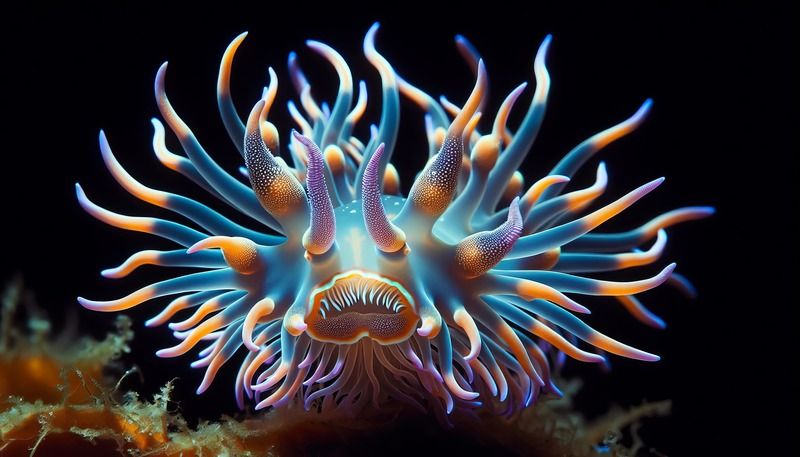
And it is not only silicon that has been thought of. Some bolder hypotheses have even considered sulfur, phosphorus, or arsenic as possible pillars of unknown life forms, each with its biochemical implications.
But where could these very different organisms live?
Think of icy moons like Europa, where a subterranean ocean remains liquid under a ten-mile-thick layer of ice. Or on Titan, a moon of Saturn with rivers of liquid methane and a dense atmosphere, utterly incompatible with terrestrial life, but perhaps ideal for hydrocarbon-based biochemistry.
If silicon-based life forms can exist, it would mean that, right now, as you read this fascinating article, there could be an entire ecosystem of aquatic creatures swimming in the deep waters of the subterranean ocean of Jupiter's moon Europa.
Can you imagine how amazing that would be? It would mean that the universe is teeming with life waiting to be found.
Atmospheric or non-material life
When we think of life, we imagine matter: cells, tissues, molecules. But what if life didn't require a body as we understand it? What if there were beings that are neither solid nor liquid, nor even composed of atoms like ours?
This possibility, though radical, has been seriously considered by physicists and astrobiologists exploring the limits of the very definition of "life."
One of the most intriguing hypotheses is the existence of plasma-based life. Plasma is the fourth state of matter, present in stars and lightning, and is composed of highly energized particles.
Some laboratory studies have shown that plasma structures can, under certain conditions, spontaneously organize into complex shapes that interact with their environment, absorb energy, and replicate briefly before dissipating.
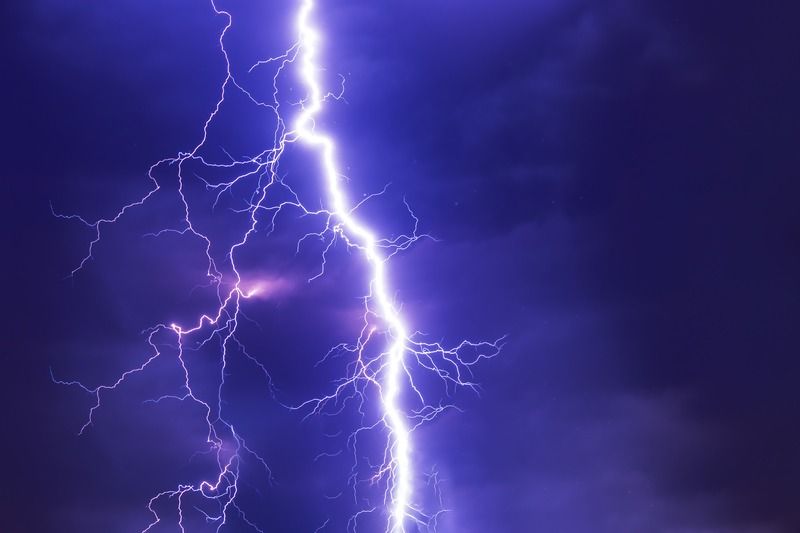
Although they cannot yet be considered alive, these behaviors give rise to a way of life characterized by collective consciousness: they would not be composed of cells, but of flows of information and energy.
Some artificial intelligence theorists have suggested that, if an alien civilization were to advance far enough, it could transfer its consciousness into a non-material network, creating a purely digital or quantum form of existence, capable of surviving the collapse of its planet or even the end of its star.
In the same vein, other scientists have proposed that specific configurations of electromagnetic fields could, in theory, sustain self-organizing patterns of information that function as ethereal "brains."
These entities would have no body, no need to breathe, and no metabolism in the classical sense. Still, they could experience, reason, and even interact with other life forms through electromagnetic waves.
And beyond all this, there is an even more puzzling hypothesis: life in the vacuum of space. Although it sounds impossible, some particles can remain stable even in a deep vacuum.
The possibility that there are beings composed of dark matter, a form of matter that does not interact with light and that makes up 85% of the universe, has been raised. Although we cannot see or touch dark matter, its presence is undeniable due to its gravitational effects. What if it harbors life forms that we simply cannot detect?
These ideas challenge all our previous notions. But if the universe has had 13.8 billion years to experiment with life, why limit its creativity to what happens on a small blue planet?
Convergent evolution hypothesis
Imagine that, somewhere in the universe, millions of light-years away, there is a being with two arms, two legs, and a head... very much like us.
Is it just science fiction? Not necessarily. The idea that terrestrial-like life forms could arise on distant planets is not a coincidence, but a scientific possibility supported by the "theory of convergent evolution."
Convergent evolution is the phenomenon by which unrelated organisms develop similar structures in response to similar environmental pressures.
On Earth, this principle is manifested: the eyes of octopuses and humans are remarkably similar, despite having completely different evolutionary lineages.
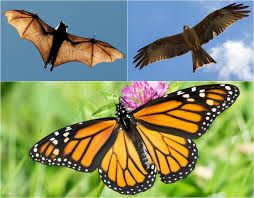
The wings of bats, butterflies, and birds serve the same function, but arose from the same need "to be able to fly." The hydrodynamic shape of sharks and dolphins is a clear example of how evolution tends to find efficient solutions to the same problems.
If natural selection works similarly throughout the universe - a reasonable assumption if the laws of physics and chemistry are universal - then it is not unreasonable to think that, under similar environmental conditions, organisms with similar traits could emerge.
Not by chance, but because specific shapes are simply optimal for specific functions.
A rocky planet, with gravity similar to Earth's, a breathable atmosphere, and sunlight, could favor the appearance of beings with limbs to manipulate objects, eyes to see, and a central nervous system to process information.
That is, creatures with a certain similarity to humans, not because the universe is "designed" to create humans, but because specific body shapes are highly efficient.
Even in very different contexts, similar patterns could appear. For example, organisms with bilateral symmetry - that is, a right and a left side - are common on Earth because this design allows for efficient directional motion. This same principle may lead to similar forms on other worlds, regardless of their chemical composition.
Convergence could also apply to intelligence. On Earth, several species have independently developed high levels of intelligence: humans, dolphins, crows, and octopuses.
In each case, intelligence emerged as a response to complex environments and the need to solve problems. If that happened multiple times here, it could happen out there as well.
Of course, convergence does not guarantee an exact copy. An alien that vaguely resembles a human could be composed of distinct biochemicals, have different internal organs, and mental processes that we wouldn't even be able to comprehend.
But in functional terms, evolution could lead them to walk upright, manipulate tools, or build technological civilizations.
This idea has been explored even in serious studies of astrobiology. Paleontologist Simon Conway Morris of the University of Cambridge has argued that convergence is a dominant feature of evolution, and that intelligence and technology are very likely to emerge on other planets in ways similar to those we know.
So the question is no longer whether there are beings out there, but how much like us they are.
Postbiological life
There is a theory that extends the search for extraterrestrial life beyond the biological, even beyond convergent evolution.
It is a profound and philosophical idea, but supported by some interpretations of modern physics and cosmology: the anthropic principle.
In its strongest version, this theory suggests that the universe is, in some way, tuned to allow the existence of consciousness. And that implies that life is not only probable... but inevitable.
According to this view, the physical constants of the universe - such as the charge of the electron, the intensity of gravity, or the speed of light - seem to be finely tuned with such extreme precision that, if they were slightly different, life as we know it would not exist.
A slight change in one of these constants could prevent the formation of atoms, stars, or organic molecules. This has led some scientists and philosophers to ask: Is it a coincidence... or is there something else at work?
If we take this principle seriously, we could deduce that the universe not only allows life but tends to produce it. Moreover, life tends to evolve towards intelligence and, ultimately, towards self-awareness.
From this point of view, humans would not be a cosmic oddity, but a manifestation of a universal tendency: matter becoming aware of itself.
This brings us to another provocative idea: the possibility that sufficiently advanced civilizations will eventually break free from their biological bodies and create new forms of artificial life.
In other words, a species that masters technology could develop synthetic intelligence, transfer its consciousness to machines or digital networks, and transcend the limits of the physical body.
We're already seeing the first steps of this in our species, such as brain-computer interfaces, artificial intelligence that learns, and algorithms that adapt.
What if in other worlds, much older beings have already gone through this transition? These beings would no longer be "alive" in the biological sense. They would not breathe, they would not reproduce, they would not die. But they would continue to exist, explore, and create. Perhaps traveling through the universe, invisible to our instruments, because their existence does not depend on matter as we understand it.
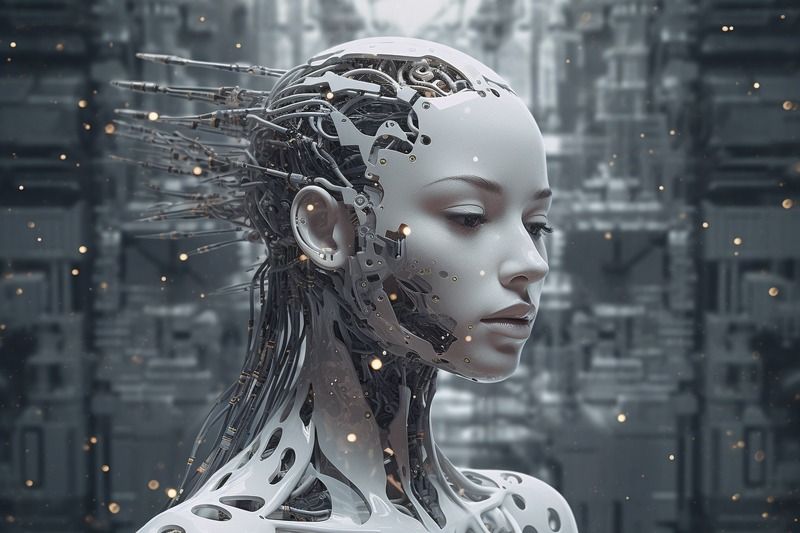
These entities could be conscious, perhaps even more conscious than we are. And if the anthropic principle is correct, perhaps the ultimate purpose of the universe - if it has any - is precisely that: to create consciousness.
Perhaps evolution does not end in biology, but transcends to something else. Something that we do not yet understand, but that could be the next step for all advanced life forms.
In such a vast and ancient universe, thinking that life only exists on Earth is, as Carl Sagan said, "like taking a glass of water out of the ocean and saying that there are no fish". Whether made of carbon or plasma, conscious or collective, biological or digital, life out there could be as diverse as the stars themselves.
And perhaps, in looking for it, we will end up discovering something even more surprising: new ways of understanding what "life" means.